The Third Sunday in Advent
Augustine on Psalm LIII
Advent Three Home
LORD, we beseech thee, give
ear to our prayers, and by thy gracious visitation lighten the
darkness of our heart, by our Lord Jesus Christ. Amen
ALMIGHTY God, give us grace that we may cast away the works of
darkness, and put upon us the armour of light, now in the time of
this mortal life, in which thy Son Jesus Christ came to visit us in
great humility; that in the last day, when he shall come again in
his glorious majesty to judge both the quick and the dead, we may
rise to the life immortal, through him who liveth and reigneth with
thee and the Holy Ghost, now and ever. Amen.
Source: First Collect-Middle Ages-found in 1549 COE Prayer Book.
Psalms 52, 53 | 93, 94 , 1 Corinthians iv. 1 & St. Matthew xi. 2
Homily of Augustine on Psalm LIII
Psalm for Morning and Evening 52,53 | 93, 94
1 Corinthians iv. 1
LET a man so account of us, as of the ministers of Christ, and
stewards of the mysteries of God. Moreover it is required in
stewards, that a man be found faithful. But with me it is a very
small thing that I should be judged of you, or of man's judgment:
yea, I judge not mine own self. For I know nothing against myself;
yet am I not hereby justified: but he that judgeth me is the Lord.
Therefore judge nothing before the time, until the Lord come, who
both will bring to light the hidden things of darkness, and will
make manifest the counsels of the hearts: and then shall every man
have praise of God.
St. Matthew xi. 2
NOW when John had heard in the prison the works of Christ, he sent
two of his disciples, and said unto him, Art thou he that should
come, or do we look for another? Jesus answered and said unto them,
Go and shew John again those things which ye do hear and see: the
blind receive their sight, and the lame walk, the lepers are
cleansed, and the deaf hear, the dead are raised up, and the poor
have the gospel preached to them. And blessed is he, whosoever
shall not be offended in me. And as they departed, Jesus began to
say unto the multitudes concerning John, What went ye out into the
wilderness to see? A reed shaken with the wind? But what went ye
out for to see? A man clothed in soft raiment? behold, they that
wear soft clothing are in kings' houses. But what went ye out for
to see? A prophet? yea, I say unto you, and more than a prophet.
For this is he, of whom it is written, Behold, I send my messenger
before thy face, which shall prepare thy way before
thee.
Scripture from 1928 Book of Common Praye
The Collects of Thomas Cranmer
Augustine
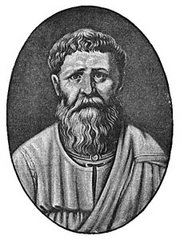
Psalm LIII
1. Of this Psalm we undertake to
treat with you, as far as the Lord supplieth us. A brother biddeth
us [1926] that we may have the will, and prayeth that we may have
the power. If anything in haste perchance I shall have passed over,
He that even to us deigneth to give what we shall be enabled to
say, will supply it in you. The title of it is: "At the end, for
Maeleth, understanding to David himself." "For Maeleth," as we find
in interpretations of Hebrew names, seemeth to say, For one
travailing, or in pain. But who there is in this world that
travaileth and is in pain, the faithful acknowledge, because
thereof they are. Christ here travaileth, Christ here is in pain:
the Head is above, the members below. For one not travailing nor in
pain would not say, "Saul, Saul, why persecutest thou me?" [1927]
Him, with whom when persecuting He was travailing, being converted,
He made to travail. For he also was himself afterwards enlightened,
and grafted on those members which he used to persecute; being
pregnant with the same love, he said, "My little children, of whom
again I travail, until Christ be formed in you." [1928] For the
members therefore of Christ, for His Body which is the Church,
[1929] for that same One Man, that is, for that very unity, whereof
the Head is above, this Psalm is sung....Who are they, then, amid
whom we travail and groan, if in the Body of Christ we are, if
under Him, the Head, we live, if amongst His members we are
counted? Who they are, hear ye.
2. "The unwise man hath said in his heart, There is no God" (ver.
1). Such sort is it of men amid whom is pained and groaneth the
Body of Christ. If such is this sort of men, of not many do we
travail; as far as seemeth to occur to our thoughts, very few there
are; and a difficult thing it is to meet with a man that saith in
his heart, "There is no God;" [1930] nevertheless, so few there
are, that, fearing amid the many to say this, in their heart they
say it, for that with mouth to say it they dare not. Not much then
is that which we are bid to endure, hardly is it found: uncommon is
that sort of men that say in their heart, "There is no God." But,
if it be examined in another sense, is not that found to be in more
men, which we supposed to be in men few and uncommon, and almost in
none? Let them come forth into the midst that live evil lives, let
us look into the doings of profligate, daring, and wicked men, of
whom there is a great multitude; who foster day by day their sins,
who, their acts having been changed into habit, have even lost
sense of shame: this is so great a multitude of men, that the Body
of Christ, set amid them, scarce dareth to censure that which it is
not constrained to commit, and deemeth it a great matter for itself
that the integrity of innocence be preserved in not doing that
which now, by habit, either it doth not dare to blame, or if it
[1931] shall have dared, there breaketh out the censure and
recrimination of them that live evil lives, more readily than the
free voice of them that live good lives. And those men are such as
say in their heart, "There is no God." Such men I am confuting.
Whence confuting? That their doings please God, they judge. He doth
not therefore affirm, "some say," but "The unwise man hath said in
his heart, There is no God." Which men do so far believe there is a
God, that the same God they judge with what they do to be pleased.
But if thou being wise dost perceive, how "the unwise man hath said
in his heart, There is no God," if thou give heed, if thou
understand, if thou examine; he that thinketh that evil doings
please God, Him he doth not think to be God. For if God is, He is
just; if He is just, injustice displeaseth Him, iniquity
displeaseth. But thou, when thou thinkest that iniquity pleaseth
Him, dost deny God. For if God is one Whom iniquity displeaseth,
but God seemeth not to thee to be one whom iniquity displeaseth,
and there is no God but one whom iniquity displeaseth, then when
thou sayest in thy heart, God doth countenance my iniquities, thou
sayest nothing else than, "There is no God."
3. Let us advert also to that sense, which concerning Christ our
Lord Himself, our Head Himself, doth present itself. For when
Himself in form of a servant [1932] appeared on earth, they that
crucified Him said, "He is not God." Because Son of God He was,
truly God He was. But they that are corrupted and have become
abominable said what? "He is not God:" let us slay Him, "He is not
God." Thou hast the voice of these very men in the book of Wisdom.
[1933] For after there had gone before the verse, "The unwise man
hath said in his heart, There is no God;" as if reasons were
required why the unwise man could say this, he hath subjoined,
"Corrupted they are, and abominable have become in their
iniquities" (ver. 2). Hear ye those corrupted men. "For they have
said with themselves, not rightly thinking:" [1934] corruption
beginneth with evil belief, thence it proceedeth to depraved
morals, thence to the most flagrant iniquities, these are the
grades. But what with themselves said they, thinking not rightly?
"A small thing and with tediousness is our life." [1935] From this
evil belief followeth that which also the Apostle hath spoken of,
"Let us eat and drink, for to-morrow we shall die." [1936] But in
the former passage more diffusely luxury itself is described: "Let
us crown us with roses, before they be withered; in every place let
us leave the tokens of our gladness." [1937] After the more diffuse
description of that luxury, what followeth? "Let us slay the poor
just man:" [1938] this is therefore saying, "He is not God." Soft
words they seemed but now to say: "Let us crown us with roses,
before they be withered." What more delicate, what more soft?
Wouldest thou expect, out of this softness, Crosses, swords? Wonder
not, soft are even the roots of brambles; if any one handle them,
he is not pricked: but that wherewith thou shalt be pricked from
thence hath birth. "Corrupted," therefore, are those men, "and
abominable have become in their iniquities." They say, "If Son of
God He is, let Him come down from the Cross." [1939] Behold them
openly saying, "He is not God."...
4. "The Lord from Heaven hath looked forth upon the sons of men,
that He might see if there is one understanding and seeking after
God" (ver. 3). What is this? "Corrupted they are," all these that
say, "There is no God"? And what? Did it escape God, that they were
become such? Or indeed to us would their inward thought be opened,
except by Him it were told? If then He understood, if then He knew,
what is this which hath been said, "that He might see"? For the
words are of one inquiring, of one not knowing. "God from Heaven
hath looked forth," etc. And as though He had found what He sought
by looking upon, and by looking down from Heaven, He giveth
sentence: "All men have gone aside, together useless they have
become: there is not one that doeth good, not so much as one" (ver.
4). Two questions arise somewhat difficult: for if God looketh out
from Heaven, in order that He may see if there is one understanding
or seeking after God; there stealeth upon an unwise man the
thought, that God knoweth not all things. This is one question:
what is the other? If there is not one that doeth good, is not so
much as one; who is he that travaileth amid bad men? The former
question then is solved as followeth: ofttimes the Scripture
speaketh in such manner, that what by the gift of God a creature
doth, God is said to do....For hence has been said the following
also, "For the Spirit searcheth all things, even the depth of God;"
[1940] not because He that knoweth all things searcheth, but
because to thee hath been given the Spirit, which maketh thee also
to search: and that which by His own gift thou doest, He is said to
do; because without Him thou wouldest not do it: therefore God is
said to do, when thou doest....And because this by the gift of God
thou doest, God from heaven is "looking forth upon the sons of
men." The former question then, according to our measure, thus hath
been solved.
5. What is that which looking forth we acknowledge? What is that
which looking forth God acknowledgeth? What (because here He giveth
it) doth He acknowledge? Hear what it is; that "All have gone
aside, together useless they have become: there is not one that
doeth good, there is not so much as one." What then is that other
question, but the same whereof a little before I have made mention?
If, "There is not one that doeth good, is not so much as one," no
one remaineth to groan amid evil men. Stay, saith the Lord, do not
hastily give judgment. I have given to men to do well; but of Me,
He saith, not of themselves: for of themselves evil they are: sons
of men they are, when they do evil; when well, My sons. For this
thing God doth, out of sons of men He maketh sons of God: because
out of Son of God He hath made Son of Man. See what this
participation is: there hath been promised to us a participation of
Divinity: He lieth that hath promised, if He is not first made
partaker of mortality. For the Son of God hath been made partaker
of mortality, in order that mortal man may be made partaker of
divinity. He that hath promised that His good is to be shared with
thee, first with thee hath shared thy evil: He that to thee hath
promised divinity, showeth in thee love. Therefore take away that
men are sons of God, there remaineth that they are sons of men:
"There is none that doeth good, is not so much as one."
6. "Shall not all know that work iniquity, that devour My people
for the food of bread"? (ver. 5)....There is therefore here a
people of God that is being devoured. Nay, "There is not one that
doeth good, there is not so much as one." We reply by the rule
above. But this people that is devoured, this people that suffereth
evil men, this that groaneth and travaileth amid evil men, now out
of sons of men have been made sons of God: therefore are they
devoured. For, "The counsel of the needy man thou hast confounded,
because the Lord is his hope." [1941] For ofttimes, in order that
the people of God may be devoured, this very thing in it is
despised, that it is the people of God. I will pillage, he saith,
and despoil; if he is a Christian, what will he do to me?...But
what followeth? "I will convince thee, and will set thee before thy
face." Thou wilt not now know so as thou shouldest be displeasing
to thyself, thou shalt know so as thou mayest mourn. For God cannot
but show to the unrighteous their iniquity. If He is not to show,
who will they be that are to say, "What hath profited us pride, and
what hath boasting of riches bestowed upon us?" [1942] For then
shall they know, that now will not know. "Shall not all know?" etc.
Why hath He added, "for the food of bread"? As it were as bread,
they eat My people. For all other things which we eat, we can eat
now these, now those; not always this vegetable, not always this
flesh, not always these apples: but always bread. What is then,
"Devour My people for the food of bread"? Without intermission,
without cessation they devour.
7. "On God they have not called." He is comforting the man that
groaneth, and chiefly by an admonition, lest by imitating evil men,
who ofttimes prosper, they delight in evil doing. There is kept for
thee that which to thee hath been promised: their hope is present,
thine is future, but theirs is transient, thine sure; theirs false,
thine true. For they "upon God have not called." Do not daily such
men ask of God? They do "not" ask of God. Give heed, if I am able
to say this by the aid of God Himself. God gratuitously will have
Himself to be worshipped, gratuitously will have Himself to be
loved, that is chastely to be loved; not Himself to be loved for
the reason that He giveth anything besides Himself, but because He
giveth Himself. He then that calleth upon God in order that He may
be made rich, on God doth not call: for upon that He calleth which
to himself he willeth to come....But now thou wouldest have coffer
full, and conscience void: God filleth not coffer, but breast. What
do outward riches profit thee, if inward need presseth thee?
Therefore those men that for the sake of worldly comforts, that for
the sake of earthly good things, that for the sake of present life
and earthly felicity, call upon God, do not call upon God.
8. For this reason what followeth concerning them? "There have
they feared with fear, where there was no fear" (ver. 6). For is
there fear, if a man lose riches? There is no fear there, and yet
in that case men are afraid. But if a man lose wisdom, truly there
is fear, and in that case he is not afraid....Thou hast feared to
give back money, and hast willed to lose fidelity. The Martyrs took
not away property of other persons, but even their own they
despised that they might not lose fidelity: and it was too little
to lose money, when they were proscribed; they took also their life
when they suffered: they lost life, in order that unto everlasting
life they might find it. [1943] Therefore there they feared, where
they ought to have been afraid. But they that of Christ have said,
"He is not God," have there feared where was no fear. For they
said, "If we shall have let Him go, there will come the Romans, and
will take away from us both place and kingdom." [1944] O folly and
imprudence saying in its heart, "He is not God"! Thou hast feared
to lose earth, thou hast lost Heaven: thou hast feared lest there
should come the Romans, and take away from thee place and kingdom!
Could they take away from thee God? What then remaineth? what but
that thou confess, that thou hast willed to keep, and by keeping
ill hast lost? For thou hast lost both place and nation by slaying
Christ. For ye did will rather to slay Christ, than to lose place;
and ye have lost place, and nation, and Christ. In fearing, they
have slain Christ: but wherefore this? "For God hath scattered the
bones of them that please men." [1945] Willing to please men, they
feared to lose their place. But Christ Himself, of whom they said,
"He is not God," willed rather to displease such men, as they were:
sons of men, not sons of God, He willed rather to displease. Thence
were scattered their bones, His bones no one hath broken. "They
were confounded, for God hath despised them." In very deed,
brethren, as far as regardeth them, great confusion hath come to
them. In the place where they crucified the Lord, whom for this
cause they crucified, that they might not lose both place and
nation, the Jews are not. "God," therefore, "hath despised them:"
and yet in despising He warned them to be converted. Let them now
confess Christ, and say, He is God, of whom they said, "He is not
God." Let them return to the inheritance of their fathers, to the
inheritance of Abraham, of Isaac, and of Jacob, let them possess
with these very persons life eternal: though they have lost life
temporal. Wherefore this? Because out of sons of men have been made
sons of God. For so long as they remain, and will not, there is not
one that doeth good, there is not so much as one. "They were
confounded, for God hath despised them." And as though to these
very persons He were turned, He saith, "Who shall give out of Sion
salvation to Israel?" (ver. 7). O ye fools, ye revile, insult,
buffet, besmear with spittings, with thorns ye crown, upon the
Cross ye lift up; whom? "Who shall give out of Sion salvation to
Israel?" Shall not That Same of whom ye have said, "He is not God"?
"In God's turning away the captivity of His people." For there
turneth away the captivity of His people, no one but He that hath
willed to be a captive in your own hands. But what men shall
understand this thing? "Jacob shall exult, and Israel shall
rejoice." "Israel;" the true Jacob, and the true Israel, that
younger, to whom the elder was servant, [1946] shall himself exult,
for he shall himself understand.
Let us pray in the words of Augustine.
Turn we to the Lord God, the Father Almighty, and with pure
hearts offer to him, so far as our meanness can, great and true
thanks, with all our hearts praying his exceeding kindness, that of
his good pleasure he would deign to hear our prayers, that by his
Power he would drive out the enemy from our deeds and thoughts,
that he would increase our faith, guide our understandings, give us
spiritual thoughts, and lead us to his bliss, through Jesus Christ
his Son our Lord, who liveth and reigneth with him, in the Unity of
the Holy Spirit, one God, for ever and ever. Amen.
[A prayer which he was wont to use after his
Sermons and Lectures.]
NPNF (V1-08) St. Augustine
__________________________________________________________________
[1925] Lat. LII. From a sermon preached to the people at the
request of some one, perhaps of a bishop.--Ben. [1926] Al. "Bid us,
brethren,...pray for us." [1927] Acts ix. 4. [1928] Gal. iv. 19.
[1929] Col. i. 24. [1930] Ps. xiv. 1. [1931] So Oxf. mss. (ausum);
Ben. ausus, "one." [1932] Phil. ii. 7. [1933] Wisd. ii. 18-20. [See
p. 172, supra.--C.] [1934] Wisd. ii. 1. [1935] Wisd. ii. 1. [1936]
1 Cor. xv. 32. [1937] Wisd. ii. 8, 9. [1938] Wisd. ii. 10. [1939]
Matt. xxvii. 40. [1940] 1 Cor. ii. 10. [1941] Ps. xiv. 6. [1942]
Wisd. v. 8. [1943] Matt. x. 39. [1944] John xi. 48. [1945] E.V.
"that encamp against thee." [1946] Gen. xxv. 23.
Finis
HOME